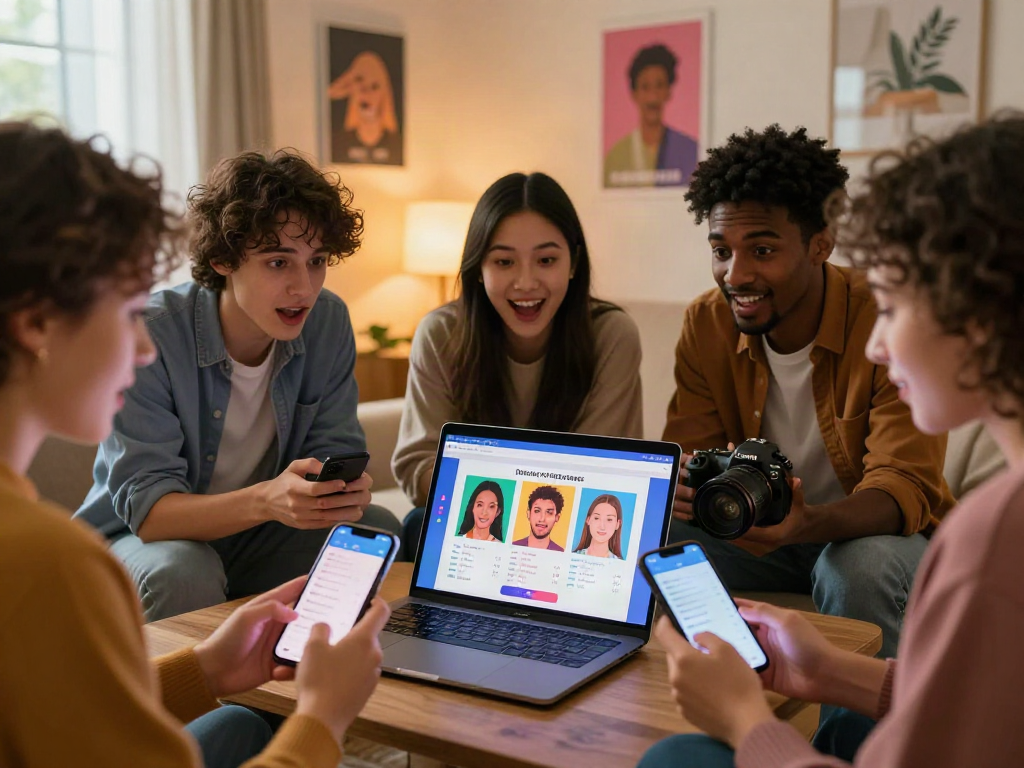
Understanding Age Perception and Its Importance
In our visually driven society, the question "how old do I look?" has transcended mere curiosity, becoming a significant aspect of self-image and social interaction. Age perception influences personal and professional relationships, impacting everything from dating to job prospects. With the rise of artificial intelligence (AI) technologies, it is now possible to receive an objective assessment of one’s perceived age through various apps and platforms. This article explores the psychology behind age perception, the science of facial age recognition, and how this technology is changing the way we view ourselves and others.
When exploring options, how old do i look tools offer a fun and intriguing way to engage with these new advancements.
What Does "How Old Do I Look" Mean?
The phrase "how old do I look?" encompasses both the subjective and objective interpretations of age. Subjectively, it reflects an individual's feelings about their age and appearance. Objectively, it is about how others perceive one's age based on facial features, skin conditions, and even lifestyle choices that manifest in one's appearance. The question often arises in social settings, where personal insecurities about aging may lead individuals to seek validation or reassurance.
The Science Behind Facial Age Recognition
Facial age recognition technology uses algorithms and AI to analyze a person’s facial features, predicting their biological age. This technology examines factors such as skin texture, wrinkles, and facial structure to arrive at an estimation. Recent advancements in machine learning have enhanced the accuracy of these tools, enabling them to analyze thousands of facial characteristics against vast databases of images to provide reliable age assessments.
Why Do We Care About How Old We Look?
Understanding how old we look can have various implications. Socially, age often carries certain stereotypes, affecting how individuals are treated in various settings. Younger appearances might be associated with vitality and energy, potentially opening doors in professional contexts, while older appearances may lead to assumptions about experience and reliability. Moreover, in the age of social media, where visual representation can significantly impact one's image, the quest to appear youthful or to understand one’s age perception is ever more relevant.
Popular How Old Do I Look Apps Reviewed
Overview of Leading Apps in 2026
The market for age estimation apps has exploded, with numerous options available in 2026. Some of the most popular apps include:
- FaceAge.ai: Known for its AI-powered facial age estimation, this app allows users to upload photos securely and privately.
- Fotor: This free-age guessing tool analyzes skin and features to provide an estimate without requiring sign-up.
- BeautyPlus: Offers a social aspect, letting users share their results on various platforms, making it a blend of fun and self-discovery.
Comparative Analysis: Features and Usability
Each app in the market offers unique features, catering to different user preferences. FaceAge.ai provides a straightforward interface with a focus on accuracy, while Fotor emphasizes ease of use with no sign-up process. BeautyPlus not only provides age estimation but also integrates beauty filters, appealing to users interested in enhancing their appearance. By comparing these features, users can choose an app that best suits their needs.
User Reviews and Ratings: What to Expect
User feedback is crucial in assessing the reliability and satisfaction levels of these apps. Most users report positive experiences with FaceAge.ai, citing accurate age guesses and ease of photo uploads. Fotor users appreciate the no-signup feature, although some express desires for more detailed analysis. Generally, ratings hover around 4 stars out of 5, indicating a healthy level of satisfaction among users.
How to Use Age Estimation Apps Effectively
Step-by-Step Guide to Uploading Your Photo
Using an age estimation app can be a straightforward process. Here’s a quick guide:
- Open the app of your choice and navigate to the upload section.
- Select a clear photo, preferably with good lighting and without sunglasses or other obstructions.
- Follow the prompts to upload the photo and wait for the analysis to complete.
Interpreting Results: What the Age Estimates Mean
Once the app processes your image, it will provide an estimated age. Understanding what this number means is essential; it may not reflect your chronological age but rather how your facial features align with statistical data from various demographics. Many users find this insightful, as it can highlight aspects of their appearance they might overlook.
Common Challenges While Using Age Apps
While age estimation apps are designed to be user-friendly, there can be challenges. Inaccurate results can be frustrating, especially if a user feels self-conscious about aging. Additionally, lighting conditions and camera quality can significantly impact the app's ability to analyze a photo accurately. Users are encouraged to try different photos or angles for the best results.
The Social Aspect of Age Estimation Tech
Sharing Results: Social Media Trends
As age estimation apps gain popularity, sharing results on social media platforms has become a trend. Users often share their "real" vs. "perceived" age results to engage friends and followers, generating fun conversations about aging. This social aspect not only promotes the app but also encourages a broader discussion on age perception in society.
Age Estimation in Online Communities
Online forums and communities have sprung up around age estimation technology, where users share experiences, tips, and results. These communities can provide support for individuals facing insecurities about aging, serving as platforms for mutual encouragement and understanding.
Privacy Considerations When Using These Apps
As with any technology that requires personal data, privacy should be a primary concern. Users should be aware of how their data is being used, stored, and shared. Most reputable apps aim to promote user privacy by offering secure upload features and clear terms of service. However, users should always read these terms carefully to understand the implications of their data usage.
Future Trends in Age Estimation Technology
AI Advancements Shaping the Future
The field of age estimation is rapidly evolving due to advancements in AI and machine learning. Future iterations of these apps will likely incorporate more sophisticated algorithms that can account for a wider variety of factors affecting age perception, such as genetic markers and lifestyle choices like diet and exercise.
Predictions for Age Recognition Accuracy by 2026
Experts predict that by 2026, age recognition technology will achieve near-perfect accuracy for most populations. As data from diverse demographics increases, the algorithms will refine their predictions further, making them even more reliable.
Emerging Apps and Technologies to Watch
Innovation is constant in the tech world; thus, users should keep an eye on emerging apps that promise to take age estimation to new heights. Look for features such as real-time analysis through live video feeds and integration with health tracking software that consider overall wellness alongside appearance.
How accurate are age guessers in estimating age?
Age estimation apps have shown significant improvements in accuracy over the years. However, results can vary based on multiple factors, including photo quality and individual genetic traits. Users should view the estimates as a fun tool rather than an exact science.
Can these apps be used for more than just fun?
Yes, beyond entertainment, these apps can be leveraged for personal insights. Individuals may gain awareness of their skincare needs, motivating them to adopt healthier habits that can benefit their appearance in the long run.
What are the privacy concerns with these apps?
Privacy concerns primarily revolve around data handling. Users must be cautious about how their images and information are stored. Most reputable apps offer transparency regarding data usage, but careful consideration is essential.
Do age guessers influence self-perception?
There is potential for age guessers to significantly influence how individuals view themselves. Some may find affirmation in looking younger than they feel, while others might experience anxiety if the results are not what they expected. This psychological aspect highlights the complexity of age perception.
Are there ethical considerations in using AI for age estimation?
The use of AI for age estimation does raise ethical questions, particularly regarding bias within the algorithms. Ensuring that training datasets are diverse is crucial to avoid reinforcing age-related stereotypes that could impact societal views on aging.